
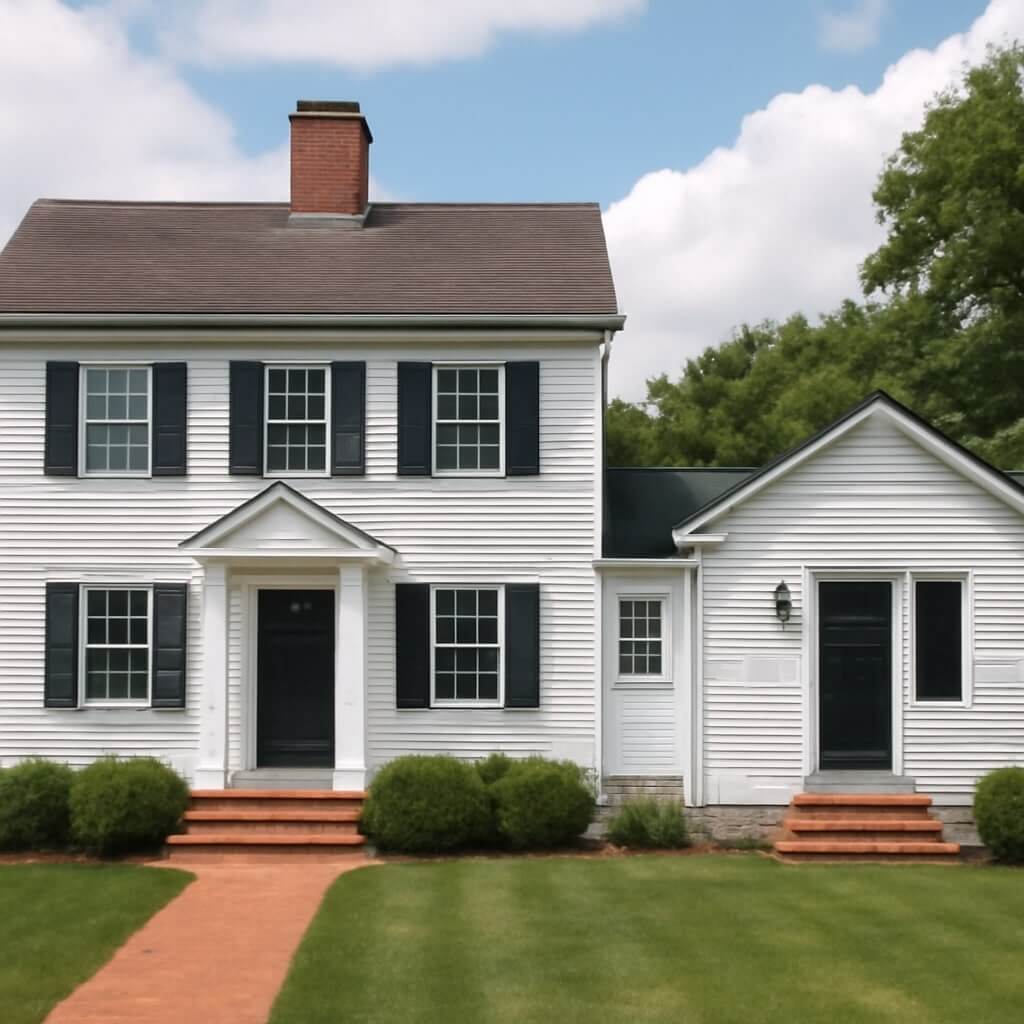
When planning a Colonial home addition, you’ll want to make certain that the new space complements the existing structure without compromising its character. It’s vital to honor the architectural style, consider scale and proportions, and focus on materials and finishes. Each decision impacts the overall aesthetic and functionality. As you move forward, think about how these elements can enhance your home’s charm while creating inviting spaces. Let’s explore these essential tips further.
Key Takeaways
- Prioritize historical accuracy by using materials and colors that align with the original Colonial architecture.
- Ensure new elements blend seamlessly with existing structures, mirroring details like moldings and rooflines.
- Maintain scale and proportion consistency to create a visually appealing silhouette that complements the main house.
- Use timeless materials and muted color palettes to reinforce the home’s charm while preserving its historical integrity.
- Focus on design continuity by reflecting existing architectural features in the addition for a cohesive aesthetic.
Honor the Architectural Style
When you’re planning an addition to a Colonial home, it’s essential to honor its architectural style, as doing so not only preserves the integrity of the original structure but also enhances its overall charm.
Focus on historical accuracy by choosing materials and colors that reflect the period, ensuring your new elements blend seamlessly.
Maintain design continuity by mirroring existing details like moldings, windows, and rooflines. Incorporate traditional features such as gables, dormers, or symmetrical layouts to reinforce the Colonial aesthetic.
Consider Scale and Proportions
To guarantee your Colonial home addition feels cohesive, it’s essential to take into account scale and proportions carefully. Aim for scale harmony between your existing structure and the new addition; this guarantees that the overall silhouette remains visually appealing.
Pay attention to proportion balance as well; windows, doors, and rooflines should align seamlessly with your home’s original design. Consider the height and width of your addition in relation to the main house, avoiding overly large or small elements that disrupt the flow.
Thoughtful planning in these areas will create a balanced aesthetic, enhancing your home’s charm and integrity.
Focus on Materials and Finishes
Maintaining harmony in scale and proportion sets a solid foundation, but the choice of materials and finishes truly elevates your Colonial home addition.
Opt for timeless materials like brick, wood, and stone that resonate with traditional aesthetics. Pair these with complementary finishes, such as classic shutters and period-appropriate hardware, to enhance authenticity.
Don’t overlook color palettes; muted tones often work best to maintain that historical feel. Pay attention to details like trim work and molding, which can further enrich your design.
Ultimately, the right combination of materials and finishes will guarantee your addition feels both cohesive and inviting.
Conclusion
By honoring the architectural style, considering scale and proportions, and focusing on materials and finishes, you can guarantee your Colonial home addition enhances its charm while preserving its character. Aim for design continuity that reflects the original features, creating a seamless shift between old and new. With these essential tips, you’ll not only maintain the integrity of your home’s aesthetic but also create inviting, functional spaces that your family will cherish for years to come.