
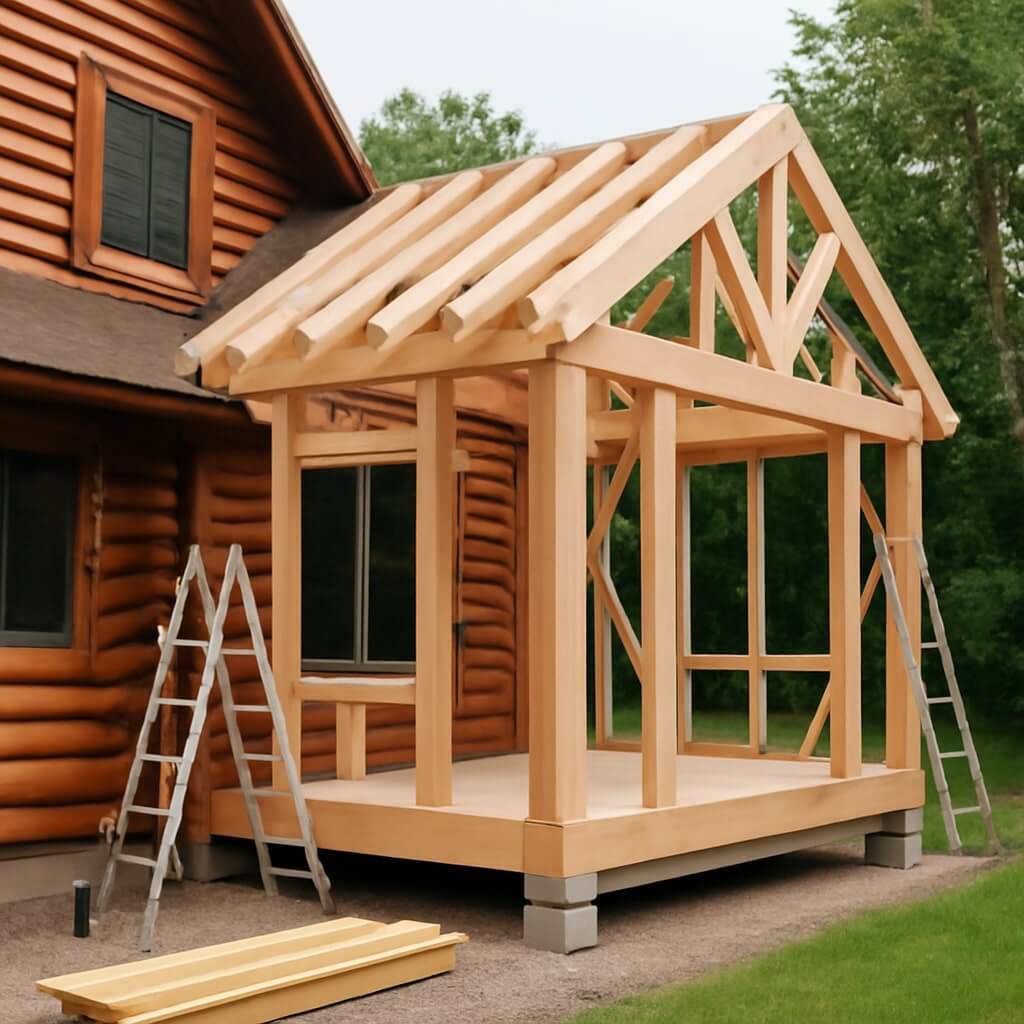
When planning log home additions, you need to contemplate various factors that affect both functionality and aesthetics. It’s not just about expanding your space; it’s about ensuring that your addition complements your lifestyle and the existing structure. From evaluating your needs to understanding local regulations, each step is essential for a successful project. Let’s explore the key tips that will guide you through this intricate process and set you up for a seamless addition.
Key Takeaways
- Assess your space and lifestyle needs to determine essential features for the log home addition.
- Familiarize yourself with local building regulations and ensure compliance with zoning laws and permit requirements.
- Choose materials that match the existing log structure for aesthetic harmony and durability.
- Incorporate energy-efficient designs and sustainable practices to minimize environmental impact and reduce utility costs.
- Plan for privacy and natural barriers in the layout to enhance comfort and visual appeal.
Assess Your Needs and Goals
Before diving into your log home addition project, it’s crucial to assess your needs and goals to guarantee the outcome meets your expectations.
Start by evaluating your space requirements—how much additional room do you truly need? Consider any lifestyle changes, like a growing family or the need for a home office.
Prioritize essential features, whether it’s an expanded kitchen, extra bedrooms, or a cozy reading nook. Sketch a rough layout that aligns with your vision.
Understand Local Building Regulations
While planning your log home addition, understanding local building regulations is essential to avoid costly delays and guarantee compliance. Familiarize yourself with zoning laws and permit requirements to assure your project aligns with local standards. Research your municipality’s specific regulations since these can vary greatly.
| Aspect | Details |
|---|---|
| Zoning Laws | Defines land use and structure types |
| Permit Requirements | Necessary documentation for approval |
| Setback Regulations | Minimum distance from property lines |
| Construction Codes | Standards for safety and materials |
| Inspection Process | Timeline and requirements for inspections |
Navigating these regulations meticulously saves you time and money.
Choose the Right Location for Your Addition
When choosing the right location for your addition, sunlight exposure plays a vital role in creating a comfortable living space.
You’ll want to assess how natural light interacts with your existing structure throughout the day.
Additionally, consider your privacy needs to guarantee the new space feels secluded and inviting.
Assess Sunlight Exposure
Choosing the right location for your log home addition hinges on carefully evaluating sunlight exposure, as it can greatly impact the comfort and energy efficiency of your new space. Consider sunlight angles throughout the day and seasonal variations. Ideally, you want your addition to capture warm morning light while minimizing harsh afternoon sun. Here’s a quick reference table:
| Season | Morning Sun | Afternoon Sun | Ideal Position |
|---|---|---|---|
| Spring | Yes | No | East |
| Summer | Yes | Partial | Southeast |
| Fall | Yes | No | East |
| Winter | Yes | Yes | South |
| Year-round | Yes | Yes | Southeast |
Evaluate carefully to enhance your living experience.
Consider Privacy Needs
How can you guarantee your log home addition offers the privacy you desire?
Start by selecting a location that minimizes visibility from neighbors and public areas. Utilize privacy landscaping, such as tall shrubs and strategically placed trees, to create natural barriers.
Consider adding sound barriers like fences or walls to reduce noise intrusion. When planning the layout, think about the proximity to outdoor spaces and ascertain your addition is positioned away from the main sightlines.
Select Compatible Materials
When planning your log home addition, selecting compatible materials is essential for a seamless integration.
Match the log species to maintain aesthetic harmony, while considering insulation options that enhance energy efficiency.
Don’t forget to coordinate color schemes to guarantee your new space complements the existing structure beautifully.
Match Log Species
Selecting the right log species for your home addition is essential for achieving a harmonious blend with your existing structure. Focus on log species compatibility to guarantee the new addition complements the original logs.
Different species have unique wood grain aesthetics, affecting both the visual appeal and durability. For instance, pairing similar grains and hues can create a seamless shift, while contrasting species might disrupt the overall design.
Carefully evaluate the characteristics of each log species you consider, keeping in mind how they’ll age and weather over time. This attention to detail will enhance your home’s beauty and integrity.
Consider Insulation Options
Achieving an energy-efficient log home addition involves careful consideration of insulation options that align with the materials used in your existing structure.
You’ll want to explore various insulation types, like spray foam, cellulose, or fiberglass, each offering unique thermal performance characteristics.
Ascertain that your chosen insulation complements the log walls, maintaining a consistent R-value throughout your addition.
Consider moisture barriers to prevent condensation issues, which can compromise the integrity of your logs.
Coordinate Color Schemes
Creating a harmonious color scheme for your log home addition is essential to guarantee it blends seamlessly with the existing structure. Achieving color harmony enhances design cohesion, making your space feel intentional.
Here are some tips to contemplate:
- Choose wood stains that match or complement your current logs.
- Integrate natural hues found in your surroundings.
- Select furnishings and decor in shades that echo your color palette.
- Use accent colors sparingly to maintain balance.
Maintain Architectural Consistency
While planning your log home addition, it’s crucial to guarantee that the new structure aligns with the existing architecture. Achieving design harmony involves matching architectural features, materials, and styles. This ensures your addition feels like a natural extension of your home.
| Element | Existing Home | New Addition |
|---|---|---|
| Roof Design | Gabled with cedar shingles | Gabled with cedar shingles |
| Log Size | 8-inch round logs | 8-inch round logs |
| Window Style | Double-hung with wooden frames | Double-hung with wooden frames |
Plan for Energy Efficiency
When planning your log home addition, prioritizing energy efficiency can markedly enhance your comfort and reduce long-term costs.
Consider these strategies:
- Incorporate energy efficient appliances to minimize energy consumption.
- Utilize passive solar design principles, maximizing natural light and heat.
- Insulate properly to maintain temperature control throughout the seasons.
- Install energy-efficient windows to prevent heat loss and gain.
Budget for the Entire Project
Estimating the budget for your log home addition is essential to guarantee the project runs smoothly and stays within financial limits.
Start with a detailed cost breakdown, including materials, labor, permits, and unexpected expenses. This helps you visualize where your money’s going and identify potential savings.
Explore various financing options, like home equity loans or personal loans, to secure necessary funds without straining your finances.
Remember, flexibility is key; your budget may need adjustments as the project evolves.
Hire Experienced Professionals
Hiring experienced professionals is essential for the success of your log home addition, as their expertise can save you time, money, and headaches down the line.
Skilled contractors understand project timelines and can provide valuable contractor recommendations tailored to your needs.
- They’ll guarantee compliance with local building codes.
- Their experience helps in maneuvering unexpected challenges.
- They can offer design insights that enhance your vision.
- A professional network can secure quality materials at better prices.
Consider Future Maintenance
While planning your log home addition, it’s essential to take into account future maintenance to secure the longevity and aesthetic appeal of your new space.
Consider how materials and finishes will impact log maintenance; choose options that resist rot and insect damage. Regular inspections and treatments can enhance long-term durability, so plan for easy access to all areas.
Incorporate features like overhangs to protect logs from rain and sun exposure. Additionally, think about the longevity of roofing and siding materials.
Incorporate Sustainable Practices
As you focus on future maintenance, don’t overlook the opportunity to incorporate sustainable practices into your log home addition.
Utilizing renewable resources and eco-friendly materials not only enhances your home’s efficiency but also reduces its environmental impact.
Incorporating renewable resources and eco-friendly materials boosts efficiency while minimizing your home’s environmental footprint.
Consider these strategies:
- Use reclaimed wood for structural elements.
- Install energy-efficient windows and insulation.
- Opt for low-VOC paints and finishes.
- Incorporate solar panels to harness renewable energy.
Conclusion
In summary, planning your log home addition requires careful consideration of your needs, local regulations, and the harmony of materials. By prioritizing energy efficiency and sustainable practices, you can create a space that not only enhances your lifestyle but also respects the environment. Don’t forget to think about long-term maintenance and budget effectively to guarantee your project runs smoothly. With the right approach, you’ll craft an addition that blends seamlessly with your log home and stands the test of time.