
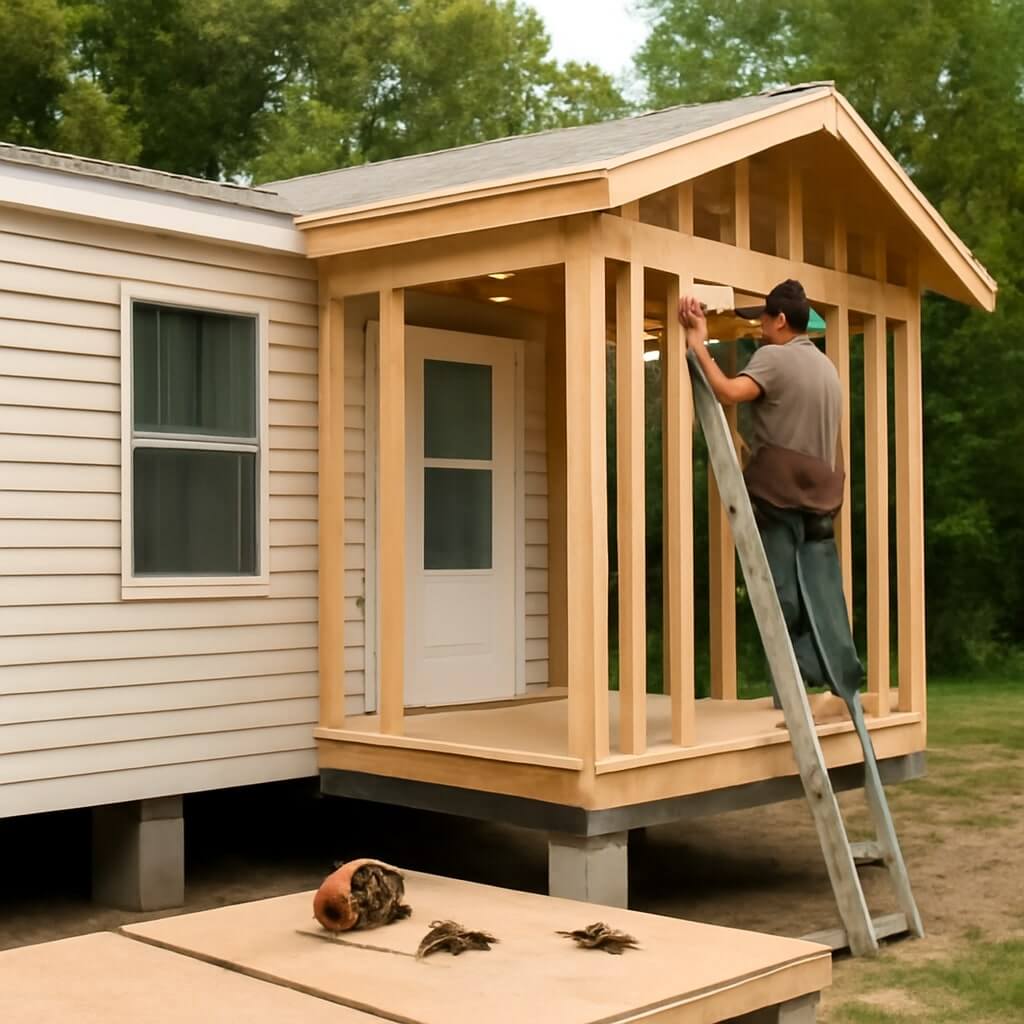
Building an addition to your mobile home can enhance its functionality and value. To start, you’ll need to assess your specific needs, such as extra living space or a home office. Understanding local building codes is essential, as it guarantees your project complies with regulations. As you plan, consider the layout and aesthetics to create a seamless shift with your existing structure. Next, let’s explore how to budget effectively for this endeavor.
Key Takeaways
- Assess your space needs, budget, and timeline to define your project’s scope before starting construction.
- Research local building codes and obtain necessary permits to ensure compliance throughout the project.
- Design a cohesive layout that integrates with your mobile home and maximizes natural light and ventilation.
- Plan for utility connections and factor in costs for materials, labor, and potential financing options.
- Schedule regular inspections during and after construction to maintain the integrity and safety of your addition.
Assessing Your Needs and Goals
When considering an addition to your mobile home, what specific needs and goals do you have in mind? Conducting a thorough needs assessment is crucial.
Identify how much extra space you require and what purpose it will serve—be it a bedroom, office, or storage area.
Next, engage in goal setting by outlining your desired timeline and budget constraints. This clarity helps prioritize features and guarantees the project aligns with your lifestyle.
Understanding Local Building Codes and Regulations
Before starting your addition, it’s essential to research local building codes and regulations that apply to mobile homes.
Understanding these guidelines will help you navigate the permit application process smoothly. Ensuring compliance not only avoids potential fines but also guarantees your project’s safety and longevity.
Research Local Regulations
Understanding local building codes and regulations is essential for a successful addition to your mobile home, as failing to comply can lead to costly setbacks.
Here are key aspects to research:
- Local zoning laws affecting your property
- Required building permits for construction
- Setback requirements from property lines
- Height restrictions on new structures
- Safety standards for electrical and plumbing work
Permit Application Process
Maneuvering through the permit application process is crucial to guarantee your addition is compliant with local building codes and regulations.
Start by identifying the necessary permit types, which may include building, electrical, or plumbing permits. Each type has specific requirements, so be thorough in your research.
Next, prepare your application, making certain all documents are complete and accurate. The application timeline can vary, so submit early and follow up regularly to avoid delays.
Don’t forget to check for any additional inspections that may be necessary. By staying organized and informed, you’ll streamline the process and guarantee a successful addition to your mobile home.
Designing Your Addition: Layout and Aesthetics
When designing your addition, focus on creating a functional layout that maximizes space and flow.
Consider how the new area will integrate with your existing mobile home and guarantee it meets your daily needs.
Additionally, incorporate aesthetic design elements that complement your home’s style, enhancing both its visual appeal and market value.
Functional Layout Considerations
Creating a functional layout for your mobile home addition requires careful planning and consideration of how the new space will interact with your existing structure.
Focus on space optimization and guarantee smooth traffic flow. Here are key points to keep in mind:
- Assess existing room dimensions
- Determine the purpose of the addition
- Plan for furniture placement and movement
- Ensure natural light and ventilation
- Consider access points and pathways
Aesthetic Design Elements
While designing the aesthetic elements of your mobile home addition, it’s essential to guarantee that the new space harmonizes with the existing structure.
Focus on modern aesthetics by incorporating clean lines and functional designs that complement your home’s style. Choose a cohesive color palette that reflects your personal taste while blending seamlessly with the original colors.
Consider materials that not only enhance visual appeal but also maintain durability. Incorporate natural light through windows or skylights to create an inviting atmosphere.
Finally, pay attention to landscaping, as it can greatly enhance the overall look and feel of your mobile home addition.
Budgeting for Your Project: Costs and Financing
How can you effectively manage your budget when adding an addition to your mobile home? Start by conducting a thorough cost estimation to understand all potential expenses.
Consider these key aspects:
- Material costs and availability
- Labor costs and contractor fees
- Utility connections and upgrades
- Landscaping and exterior work
- Unexpected contingencies
Next, explore financing options that suit your needs, like personal loans, home equity lines of credit, or government programs.
Securing Necessary Permits
Before you can start building your addition, obtaining the necessary permits is essential to guarantee compliance with local regulations.
You’ll need to identify relevant permit types, such as building, electrical, and plumbing permits, depending on your project’s scope.
Research your local government’s website or contact them directly for specific requirements. Application timelines can vary greatly, so submit your applications early to avoid delays.
Confirm all documentation is complete to facilitate a smooth approval process.
Once you secure the permits, you can confidently proceed with your addition, knowing you’re following the legal guidelines set by your municipality.
Choosing the Right Materials and Tools
Choosing the right materials and tools is essential for the success and durability of your mobile home addition. Proper material selection guarantees your addition withstands the elements, while tool compatibility helps streamline the construction process.
Consider the following:
- Pressure-treated lumber for structural integrity
- Insulation materials suited for your climate
- Durable siding options to enhance aesthetics
- Weatherproof roofing materials for longevity
- High-quality fasteners to guarantee stability
Hiring Contractors vs. DIY
After selecting the right materials and tools for your mobile home addition, you’ll need to decide whether to hire contractors or take on the project yourself.
If you opt for DIY, assess your own skills and experience; strong DIY skills can save you money but may require a steep learning curve.
Alternatively, hiring a contractor with the right qualifications can guarantee a professional finish and adherence to building codes.
Consider your timeline, budget, and comfort level with complex tasks.
Ultimately, weighing the pros and cons of both options will help you make the best decision for your addition project.
Construction Process: Step-by-Step
Initiating the construction of your mobile home addition involves several critical steps that secure a successful outcome.
Begin with thorough foundation preparation to ascertain stability. Next, employ effective framing techniques, which provide the structure for your addition.
Follow these steps:
- Obtain necessary permits
- Excavate and prepare the site
- Pour the concrete foundation
- Construct the frame using quality materials
- Confirm all work meets local building codes
Interior Finishing and Decor
Once the framing and structural components of your mobile home addition are complete, the focus shifts to interior finishing and decor. Selecting the right color schemes, wall treatments, and furniture can transform the space. Consider your lighting options to enhance the ambiance.
| Element | Suggestions | Tips |
|---|---|---|
| Color Schemes | Neutral tones, bold accents | Test samples before deciding |
| Furniture Selection | Multi-functional, space-saving | Measure before purchase |
| Lighting Options | Recessed, pendant, floor lamps | Layer lighting for effect |
| Wall Treatments | Paint, wallpaper, paneling | Choose durable materials |
| Accessories | Rugs, artwork, plants | Personalize to your style |
Maintenance Tips for Your New Addition
To keep your new addition in top shape, regular inspections and prompt repairs are essential.
Check for any signs of wear or damage, especially in the weatherproofing and insulation.
Staying proactive will help you maintain a comfortable and energy-efficient space.
Regular Inspections and Repairs
While you might be excited about your new addition, regular inspections and repairs are essential to maintaining its integrity and ensuring your comfort.
Establishing routine checks and adhering to repair schedules will help you catch potential issues early. Here are some maintenance tips to contemplate:
- Inspect the roof for leaks or damage
- Check windows and doors for proper sealing
- Examine foundation and support beams for cracks
- Assess plumbing and electrical systems regularly
- Look for signs of pests or moisture damage
Weatherproofing and Insulation Maintenance
As you commence on the journey of maintaining your new addition, effective weatherproofing and insulation are essential for energy efficiency and comfort.
Start by employing weatherproofing techniques like sealing gaps and applying weatherstripping around doors and windows. Regularly inspect caulking for deterioration and replace it as needed.
Additionally, consider insulation types such as fiberglass batts or foam boards, ensuring they’re properly installed to maximize thermal performance.
Don’t forget to check for moisture buildup, which can compromise insulation effectiveness.
Conclusion
Building an addition to your mobile home can enhance your living space considerably. By evaluating your needs, understanding local regulations, and designing a cohesive layout, you set a solid foundation for your project. Budgeting wisely and securing necessary permits are vital steps. Whether you choose to hire contractors or tackle the work yourself, following the construction process diligently guarantees a successful outcome. With proper maintenance, your new addition will provide comfort and functionality for years to come.