
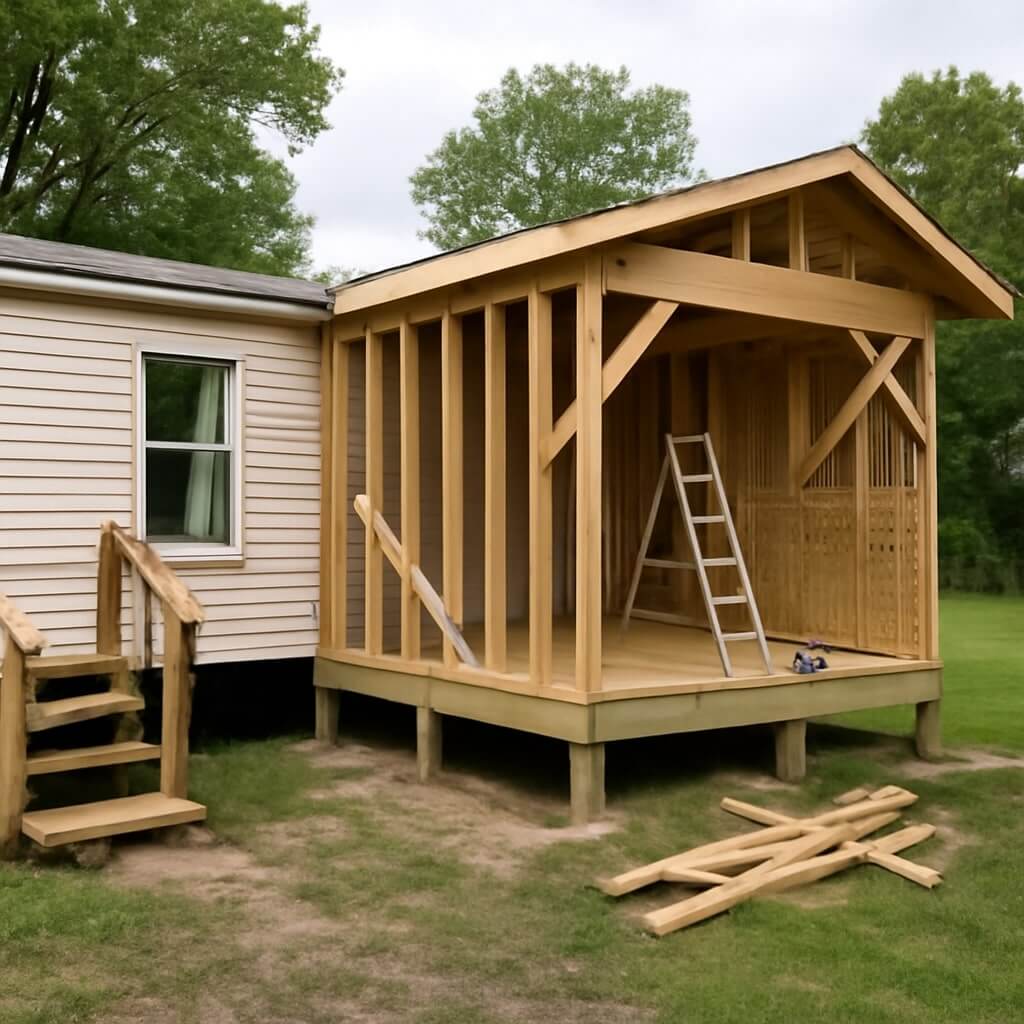
Expanding your mobile home can greatly enhance your living space and comfort. Start by evaluating your needs—what rooms or features will make your daily life better? Once you’ve got a clear vision, you’ll need to navigate zoning regulations to avoid legal issues. The design stage is where creativity meets practicality, but budgeting effectively is just as important. Are you ready to explore these steps and set your project in motion?
Key Takeaways
- Assess your space requirements and lifestyle changes to identify essential room needs for your mobile home addition.
- Research local zoning regulations to ensure compliance with land use and setback requirements for your expansion.
- Design the addition to harmonize with the existing layout, utilizing multi-functional furniture and optimizing vertical space.
- Create a realistic budget by researching material and labor costs, prioritizing key features, and setting aside a contingency fund.
- Decide whether to hire contractors or undertake a DIY project, weighing costs, skills, and time investment involved.
Assessing Your Needs and Goals
How do you envision your mobile home expanding? Start by evaluating your space requirements and lifestyle changes.
Are you welcoming a new family member, or do you require a dedicated workspace? Consider how much additional room you truly need.
Create a list of priorities: a larger kitchen, an extra bedroom, or maybe even a cozy den.
Think about how these changes will enhance your daily life and accommodate future needs.
By clearly defining your goals, you’ll make informed decisions that optimize your living environment.
Plan wisely, and your mobile home can grow to fit your evolving lifestyle seamlessly.
Understanding Zoning Regulations
Before you expand your mobile home, it’s essential to understand local zoning laws that can affect your plans.
You’ll need to navigate permitting requirements and be aware of setback regulations to guarantee your project stays compliant.
Local Zoning Laws
Understanding local zoning laws is essential when you’re planning to expand your mobile home, as these regulations can dictate what modifications are permissible in your area.
You’ll want to take into account the following:
- Zoning Classification: Identify your property’s zoning type for land use requirements.
- Setback Requirements: Verify your addition meets local setback regulations.
- Zoning Variances: If needed, apply for zoning variances to allow specific modifications.
- Permitted Uses: Check what types of additions are allowed under your zoning designation.
Being informed about these aspects will help you navigate the process smoothly and avoid potential legal issues.
Permitting Requirements Explained
Steering through the permitting process for your mobile home expansion can feel overwhelming, but getting it right is essential for a successful project.
Start by checking your local zoning regulations, as they dictate what’s permissible. You’ll need to complete an application, which typically includes detailed plans and specifications.
Keep in mind that the application timeline can vary considerably; it might take weeks or even months for approval. Be proactive in following up with the local authorities to guarantee everything’s on track.
Setback Regulations Overview
When planning your mobile home expansion, you’ll need to pay close attention to setback regulations, as they dictate how far structures must be from property lines. Ignoring these setback requirements can lead to fines or forced removals of your addition.
Here’s what to take into account:
- Local Zoning Codes: Check your municipality’s guidelines.
- Distance from Property Lines: Know the minimum required distances.
- Neighboring Structures: Verify your addition doesn’t encroach on their space.
- Future Developments: Anticipate any changes in zoning that may affect your plans.
Understanding these factors will help you navigate the expansion process smoothly.
Designing Your Addition
As you commence on the journey of designing your mobile home addition, consider how the new space will harmonize with your existing layout and lifestyle. Focus on popular design styles that complement your home while maximizing space optimization. Here’s a quick overview:
| Design Style | Key Features | Space Optimization Tips |
|---|---|---|
| Modern | Clean lines, minimalism | Use multi-functional furniture |
| Rustic | Natural materials, warmth | Incorporate built-ins |
| Contemporary | Sleek, current trends | Use vertical space wisely |
| Traditional | Classic, timeless elements | Keep layouts open |
Your thoughtful design choices will enhance your living experience.
Budgeting for Your Project
After you’ve crafted a design that reflects your style and enhances your mobile home, the next step involves creating a realistic budget for your addition.
Proper financial planning and accurate cost estimation are vital. Here’s how to get started:
- Research Costs: Gather information on materials and labor.
- Prioritize Needs: List essential features versus nice-to-haves.
- Set a Contingency Fund: Allocate 10-15% for unexpected expenses.
- Track Expenses: Keep a detailed account of your spending throughout the project.
Hiring Contractors vs. DIY
When it comes to expanding your mobile home, you’ll need to weigh the costs of hiring contractors against the potential savings of a DIY approach.
Consider your own skill level and whether you feel confident tackling the project on your own.
Making the right choice can greatly impact both your budget and the quality of the work.
Cost Considerations
Deciding whether to hire contractors or tackle your mobile home expansion as a DIY project can greatly impact your budget.
Here are some cost considerations to keep in mind:
- Material Costs: DIY often means saving on labor, but you’ll still need to invest in quality materials.
- Financing Options: Contractors may offer payment plans, while DIY projects require up-front material purchases.
- Time Investment: Consider how much time you can dedicate—time is money!
- Permitting Fees: Hiring professionals might streamline permits, which can save you headaches down the line.
Weigh these factors carefully to decide what’s best for your wallet.
Skill Level Assessment
Evaluating your skill level is essential when choosing between hiring contractors and diving into a DIY expansion for your mobile home. Consider your tools assessment, experience, and the project’s feasibility before making a decision. Here’s a quick comparison to help you decide:
| Factor | DIY | Hiring Contractor |
|---|---|---|
| Cost | Lower | Higher |
| Time Commitment | Significant effort | Professional speed |
| Expertise Required | Moderate to High | Specialized skills |
| Control | Full | Limited |
| Stress Level | Potentially high | Generally lower |
Choose wisely based on your capabilities!
Navigating the Construction Process
As you commence on the journey of expanding your mobile home, understanding the construction process can make a significant difference in the success of your project.
To navigate this efficiently, consider these steps:
- Plan: Outline your goals and budget.
- Select Construction Materials: Choose durable materials that fit your climate and style.
- Create a Project Timeline: Establish realistic deadlines for each phase.
- Hire Professionals or DIY: Decide whether you’ll need help or tackle the project yourself.
Conclusion
Expanding your mobile home with an addition can greatly enhance your living space and comfort. By carefully evaluating your needs, understanding zoning regulations, and designing harmonized spaces, you’ll create a functional and inviting environment. Don’t forget to budget wisely and choose between hiring professionals or tackling the project yourself. With careful planning and execution, you’ll transform your mobile home into a space that truly fits your lifestyle. Now, get started on making your vision a reality!