
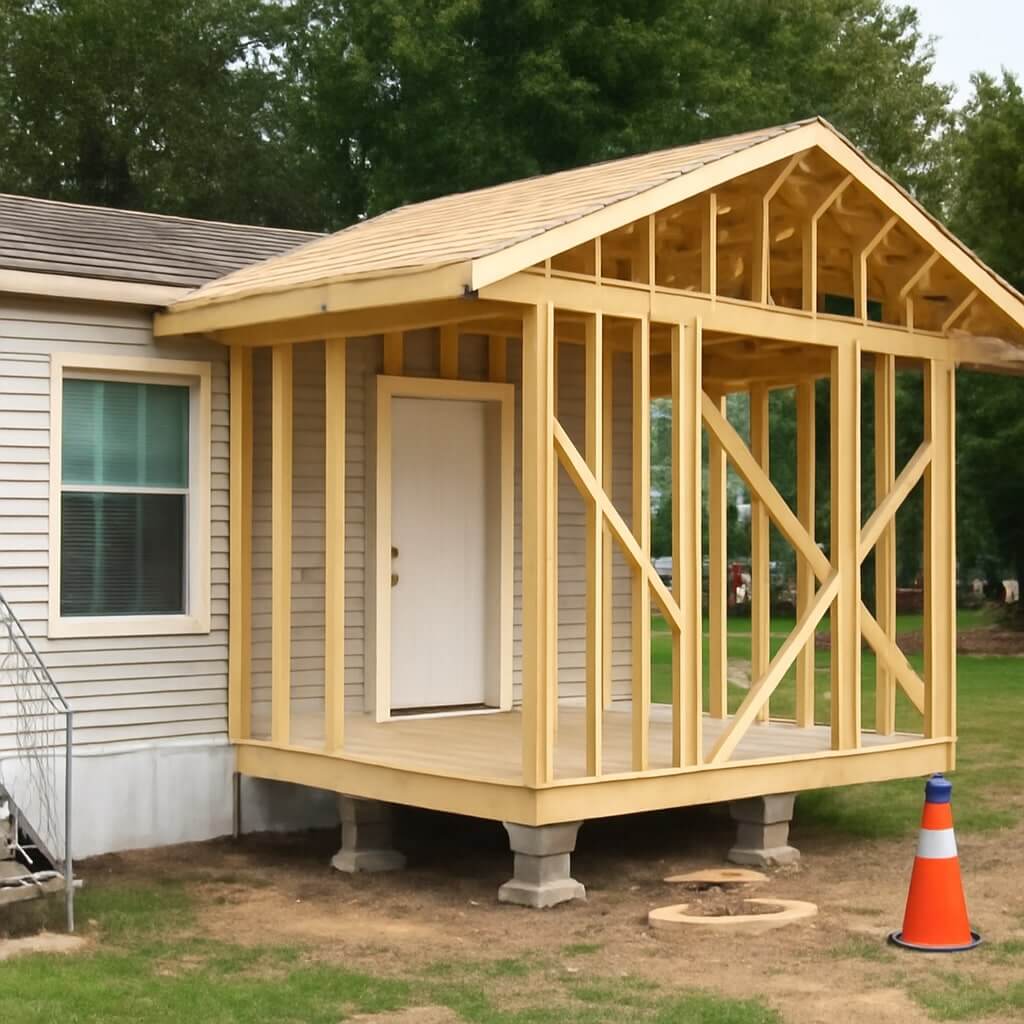
When considering an addition to your manufactured home, it’s vital to navigate a complex web of regulations. Zoning laws, building codes, and setback requirements can greatly impact your project. Each aspect demands careful scrutiny to guarantee compliance and avoid costly setbacks. Understanding these regulations is essential, as neglecting them could lead to complications. What specific steps should you take to make sure everything aligns with local requirements?
Key Takeaways
- Verify zoning classifications to ensure the addition complies with local land use regulations for manufactured homes.
- Obtain the necessary building permits to adhere to local building codes governing safety and design.
- Check foundation requirements specific to manufactured homes, including soil stability and load-bearing capacity assessments.
- Assess existing utility infrastructure to confirm adequate support for the new addition, including water and electricity.
- Review Homeowners Association guidelines to ensure compliance with aesthetic and structural standards before construction begins.
Understanding Zoning Laws
When considering home additions, understanding zoning laws is vital, as these regulations dictate what you can and can’t do with your property.
Zoning classifications play a significant role in determining allowable land use, including residential, commercial, or mixed-use designations. You’ll need to verify your property’s zoning classification to guarantee your intended addition conforms to local regulations.
Zoning classifications are crucial for ensuring your home addition aligns with local regulations and land use designations.
Additionally, these laws may impose restrictions on the size, height, and placement of your addition, affecting your design options.
Familiarizing yourself with these regulations guarantees compliance and helps you avoid costly delays or potential legal issues during your home improvement project.
Building Codes and Permits
When planning a home addition, understanding local building codes is vital to guarantee compliance and safety.
You’ll also need to secure the appropriate permits before beginning construction, as these documents are critical for legal approval.
Familiarizing yourself with these regulations helps prevent costly delays and modifications down the line.
Local Building Codes
Understanding local building codes is essential for anyone considering a home addition, as these regulations dictate what’s permissible regarding design, structure, and safety.
Local enforcement agencies guarantee that your project complies with these codes, preventing potential compliance issues that could arise during or after construction.
Familiarizing yourself with specific requirements, such as setbacks, height restrictions, and material standards, helps facilitate a smoother building process.
Ignoring these codes may lead to significant fines or mandated corrections, jeopardizing your investment.
Always consult with local authorities and professionals to guarantee your addition adheres to all relevant regulations before breaking ground.
Permit Requirements
Local building codes not only govern design and safety but also dictate the necessary permits for any home addition.
When considering various addition types for your manufactured home, you must first determine which permits apply. Typically, you’ll need a building permit, but zoning permits or special use permits may also be required, depending on local regulations.
Each jurisdiction has specific criteria, so it’s essential to consult your local building authority before commencing any work. Failing to secure the appropriate permits can result in fines or complications during inspections, potentially jeopardizing your addition’s approval and overall quality.
Foundation Requirements
When planning your home addition, understanding foundation requirements is essential.
You’ll need to take into account local building codes, assess soil stability, and navigate the permitting process.
Each of these factors plays a significant role in ensuring your addition is structurally sound and compliant with regulations.
Local Building Codes
Before starting on home additions, it’s vital to recognize that foundation requirements are governed by specific building codes that vary by jurisdiction.
Compliance with these local regulations is essential to guarantee your project meets regional standards. Typically, these codes outline specifications for foundation depth, materials, and anchoring methods, which directly affect the stability and safety of your manufactured home addition.
To avoid potential delays or fines, consult your local building department for precise guidelines.
Soil Stability Assessment
Understanding soil stability is essential for ensuring a safe and durable foundation for your home addition. Conducting thorough soil testing is vital to assess the soil’s load-bearing capacity and composition.
This evaluation allows you to identify any potential issues that could compromise your foundation integrity. Factors such as moisture content, compaction, and soil type play significant roles in determining how well your foundation will perform over time.
Permitting Process Overview
Steering through the permitting process for your home addition requires careful attention to foundation requirements, as these guidelines guarantee the safety and compliance of your project.
Begin by submitting your application, which typically involves paying application fees specific to your locality. Be mindful of permitting timelines, as they may vary based on the complexity of your addition and local regulations.
You’ll need to provide detailed plans that demonstrate your foundation meets code standards. Engaging with local authorities early can streamline this process, ensuring that your home addition adheres to necessary regulations while minimizing delays and additional costs.
Setback Regulations
Setback regulations play an important role in determining how close you can build to property lines, guaranteeing both aesthetic cohesion and safety within residential areas.
To comply with these regulations, you should consider the following factors:
- Setback distances may vary by zoning type.
- Boundary lines must be clearly defined and respected.
- Local ordinances often dictate specific measurements.
- It’s vital to consult with local authorities for compliance.
Understanding these elements will help you avoid potential fines and guarantee your addition integrates seamlessly into the neighborhood’s layout.
Always prioritize adherence to setback regulations before starting your project.
Utility Connections
Before you begin your home addition, it’s essential to address utility connections, as they greatly impact the feasibility and functionality of your project.
You’ll need to assess the existing utility infrastructure to determine if it can support your addition. This involves checking capacity for water, electricity, and sewage services.
Be prepared for potential connection fees, which can vary by location and utility provider. It’s vital to communicate with local utility companies early in the process to guarantee compliance with regulations and to avoid unexpected costs.
Proper planning here can streamline your project and prevent delays during construction.
Design and Aesthetic Considerations
While planning your home addition, it’s crucial to evaluate design and aesthetic elements that not only enhance the overall appearance but also guarantee harmony with the existing structure.
To achieve aesthetic harmony and design consistency, consider the following:
Consider architectural style, materials, color palette, and scale to ensure a harmonious and cohesive home addition.
- Architectural Style: Match the addition’s style with your manufactured home’s existing design.
- Materials: Use similar materials and finishes to maintain a cohesive look.
- Color Palette: Select colors that complement the original structure, avoiding stark contrasts.
- Scale and Proportion: Verify the addition’s size respects the home’s dimensions for visual balance.
These considerations will contribute to a unified and appealing home environment.
Impact on Property Taxes
When considering a home addition, it’s vital to understand how it may impact your property taxes.
A property assessment will likely occur after the addition is completed, resulting in a revised valuation of your home. This increased value can lead to higher property taxes, so it’s important to evaluate the potential tax implications before proceeding.
Be aware that local regulations may dictate how much your taxes can increase. Consulting with a tax professional can provide clarity on how your specific situation might affect your financial obligations, ensuring you’re prepared for any changes in your property tax responsibilities.
Homeowners Association Guidelines
Understanding property tax implications is only one aspect of planning a home addition; homeowners also need to contemplate the guidelines set forth by their Homeowners Association (HOA).
Adhering to these guidelines not only protects your homeowner rights but also maintains community standards. Before proceeding, consider the following:
- Architectural Review: Ascertain your design aligns with HOA-approved aesthetics.
- Setback Requirements: Verify minimum distance from property lines.
- Material Restrictions: Confirm allowable building materials with your HOA.
- Approval Process: Submit plans for HOA review and approval prior to construction.
Following these steps will facilitate a smoother addition process while respecting community norms.
Conclusion
In summary, adding an addition to your manufactured home requires careful consideration of various regulations. You must adhere to zoning laws, building codes, and setback requirements, ensuring structural safety and compliance with local ordinances. Additionally, don’t overlook utility connections, design aesthetics, and potential impacts on property taxes. If applicable, consult your Homeowners Association for specific guidelines. By thoroughly understanding these factors, you can navigate the process effectively and create a valuable enhancement to your home.